

Naptown's Urban Canopy: The Definitive Guide to Tree Care in the Circle City
Updated: Mar 31

The urban forest of Indianapolis, colloquially known by residents as Naptown or the Circle City, represents more than a collection of ornamental vegetation; it is a complex, living infrastructure that defines the character of the Crossroads of America. For those tasked with maintaining this canopy—from the historic estates of Meridian Hills to the vibrant streets of Broad Ripple—the challenge of tree care is multifaceted, involving a blend of biological science, local regulatory navigation, and an understanding of the unique Midwestern climate. As Indianapolis continues its transformation from a perceived "sleepy" town into a burgeoning "Super City," the health of its trees serves as a primary indicator of urban vitality and environmental justice.
The Cultural and Biological Heritage of the Indianapolis Canopy

To understand tree care in Indianapolis, one must first appreciate the historical and cultural context of the region’s greenery. The city’s identity is inextricably linked to its nickname, "Naptown," which, contrary to popular belief, does not signify a boring or sleepy atmosphere but rather traces its roots back to the 1920s jazz culture along Indiana Avenue. Musicians shortened the six-syllable name of the city to create a rhythmic, edgy shorthand that has since been re-embraced by local subcultures, from the Naptown Roller Girls to the thriving arts scene in Fountain Square. This "Naptown sound" once echoed through streets lined with American Elms and Sugar Maples, many of which have since been lost to urban development and disease. Today, the Indianapolis canopy faces a significant turning point. Longitudinal studies indicate a decline in average canopy cover from 33% to roughly 29% over the past decade. This loss is not merely an aesthetic concern; it has direct implications for the "Hoosier Hospitality" that residents pride themselves on. Neighborhoods with fewer trees often experience higher rates of surface heat, increased utility bills, and even higher rates of violent crime. Consequently, the modern approach to tree care in Marion County is increasingly focused on "Tree Equity"—the principle that every neighborhood, regardless of its socio-economic status, deserves the health and cooling benefits of a robust forest.
Indianapolis Canopy Overview | Historical Data | Current Status (2025-2026) | Target Objective |
Average Canopy Coverage | 33% | 29% | 35%+ |
Primary Threat Factor | Disease/Pests | EAB Legacy & Development | Climate Vulnerability |
Federal Funding (5-Year) | N/A | $12,000,000 | Reforestation & Pruning |
Tree Equity Disparity | Variable | <10% to >60% | Equitable Distribution |
Regional Dendrology: The Pillars of the Circle City Forest
The selection of appropriate species is the cornerstone of successful urban forestry in Central Indiana. The local climate is categorized within USDA Hardiness Zones 5b and 6a, meaning that any specimen planted must be able to withstand the biting "bipolar" weather patterns where a warm spring afternoon can rapidly transition into a hard freeze.
The State Tree: Liriodendron tulipifera

Commonly referred to as the Tulip Poplar or simply the Tulip Tree, this species is a majestic giant of the Indiana landscape. While not a true poplar—it belongs to the magnolia family—the Tulip Tree can reach heights of over 100 feet with a spread of 50 feet. Its fast growth makes it a favorite for homeowners in newer developments like those in Westfield or Fishers who are eager for shade. However, the wood of the Tulip Tree is notoriously soft, making it vulnerable to the ice storms and heavy snows that frequently occur in Naptown during December and January. Expert tree care for Tulip Trees involves strategic crown thinning to reduce wind resistance and ice loading.
The Abundant Sugar Maple (Acer saccharum)

With over 300 million specimens estimated across the state, the Sugar Maple is an iconic Indiana fixture. It provides the sap for local maple syrup and the brilliant autumnal displays that draw crowds to areas like Brown County. Despite its beauty, the Sugar Maple is highly sensitive to the environmental stressors of downtown Indianapolis. It lacks tolerance for road salt and automotive pollution, which has led to a shift toward the non-native Norway Maple in urban streetscape designs. For residential care, Sugar Maples require well-drained soil and protection from the heat-island effect of large asphalt surfaces.
Native Biodiversity and Urban Resilience
The Indiana Department of Natural Resources (IDNR) and organizations like Keep Indianapolis Beautiful (KIB) emphasize a diversified planting strategy to prevent future large-scale losses similar to those seen during the Dutch Elm Disease and Emerald Ash Borer outbreaks.
Native Indiana Species | Mature Height (ft) | Soil & Light Needs | Key Care Requirements |
White Oak | 50-100 | Well-drained; Full Sun | Avoid root compaction; slow growth |
Eastern Redbud | 20-30 | Moist; Partial Sun | Prune after spring bloom; check for cankers |
Black Cherry | 50-100 | Well-drained; Full Sun | Monitor for tent caterpillars; high timber value |
Bald Cypress | 50-100 | Wet to Moist; Full Sun | Ideal for low spots in Eagle Creek or Geist |
Sycamore | 70-100+ | Moist; Full Sun | High tolerance for urban air; watch for Anthracnose |
Soil Science: Navigating the "Black Gold" and the Clay

In the world of Indianapolis tree care, the soil is the silent architect of a tree’s destiny. Indiana is famous for its "Black Gold"—a rich, loamy soil that has fueled the state's agricultural success. However, much of Marion County sits atop heavy clay and silt, which present significant challenges for urban tree health.
The Clay Challenge

Clay soil, while nutrient-dense, is characterized by extremely fine particles that compact easily. This compaction limits the availability of oxygen to tree roots, a condition that is exacerbated during the heavy rains of an Indiana spring. When the summer heat arrives, this clay can bake into a brick-like consistency, cracking and causing physical stress to the root system. Professional care in neighborhoods with heavy clay, such as Castleton or Speedway, often involves the use of "Air-Spades" or vertical mulching to incorporate organic matter and alleviate compaction.
The Importance of Drainage

Poor drainage is a primary killer of urban trees in Central Indiana. The Adyeville and Alford silt loams found in the region have varying degrees of permeability. Trees planted in low-lying areas without proper drainage often succumb to Phytophthora root rot, a fungal infection that thrives in waterlogged conditions. For homeowners, the "Jar Test"—filling a jar with soil and water to observe the settling of sand, silt, and clay layers—is a critical first step before investing in expensive nursery-grown specimens.
Soil Type | Texture | Water Retention | Indianapolis Context |
Loam | Balanced | Ideal | The "Black Gold" sought after by local gardeners |
Clay | Sticky/Fine | High (Poor) | Common in urban areas; prone to compaction |
Silt | Smooth | Moderate | Found in loess hills and river floodplains |
Sand | Gritty | Low | Found in glacial outwash areas; drains too fast |
Plant Health Care: The Biological Adversaries of Naptown
The maintenance of the Indianapolis canopy requires a vigilant defense against a suite of pests and diseases that have devastated local populations over the last century.
The Emerald Ash Borer (EAB) Legacy

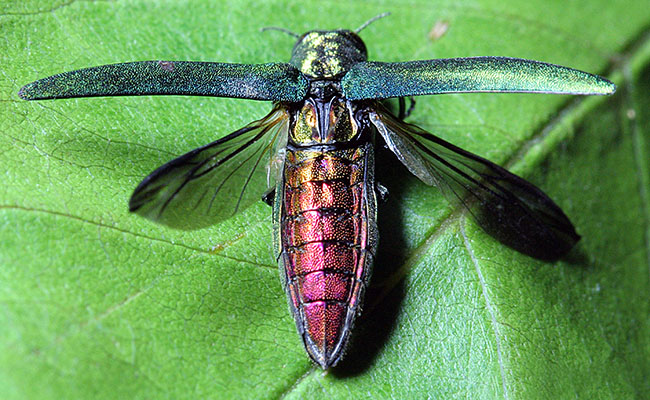
The Emerald Ash Borer (Agrilus planipennis) is perhaps the most notorious name in Indiana arboriculture. This invasive beetle from Asia was first detected in the region in the early 2000s and has since killed millions of Ash trees across the state. The EAB larvae feed on the phloem of the tree, effectively "strangling" it by cutting off its nutrient flow.

While many untreated Ash trees have already perished, the battle continues for surviving high-value specimens in neighbourhoods like Meridian Hills. Systemic insecticide injections, such as those containing emamectin benzoate, are the industry standard for protection, typically requiring re-application every two years. For trees showing more than 30% canopy dieback, removal is often the most cost-effective and safe solution, as dead Ash trees become notoriously brittle and hazardous.
Emerging Threats: The Spotted Lanternfly

The Spotted Lanternfly is the newest invasive species on the radar of Indianapolis arborists. While it has not yet reached the devastating levels of the EAB, its potential impact on local fruit trees and the logging industry is severe. Professionals at the 2026 Indiana Arborist Association conference have emphasized the importance of early detection and the removal of the invasive "Tree of Heaven" (Ailanthus altissima), which serves as the lanternfly's primary host.
Common Fungal Diseases in Central Indiana
The humidity of an Indiana summer provides the perfect breeding ground for fungal pathogens.
Oak Wilt: A fatal disease primarily affecting Red Oaks. It spreads through root grafts and can kill a mature tree in a single season.
Anthracnose: Common in Sycamores and Oaks during cool, wet springs. While rarely fatal, it causes unsightly leaf drop and blotching.
Dutch Elm Disease (DED): Still present in the region, affecting the remaining native Elm populations and requiring specialized fungicide injections for high-value survivors.
The Regulatory Framework: Flora Permits and Rights-of-Way
Tree care in Indianapolis is not just a matter of science; it is a matter of law. The Department of Public Works (DPW) and the Urban Forestry division manage the city's green infrastructure through strict permitting processes.
The Flora Permit System
In Marion County, any work performed on a tree located in the "public right-of-way"—the area between the street and the sidewalk—requires a Flora Permit. This includes planting, pruning, removal, and even fertilization. The permit is free to apply for, but the city mandates that any pruning be performed by an International Society of Arboriculture (ISA) Certified Arborist to ensure that trees are not "butchered" or "topped".
Neighbor Law and the "Law of Nuisance"
On private property, Indiana law generally places the responsibility of tree care on the owner of the land where the trunk is situated. However, the Law of Nuisance requires that homeowners maintain their property so as not to interfere with a neighbor’s enjoyment of their own land. If a rotting tree in an Irvington backyard hangs over a neighbor's roof, the owner is legally obligated to address the hazard. Conversely, neighbors have the right to trim branches that cross the property line, but they cannot trespass on the owner's land or perform trimming that kills the tree.
Jurisdiction | Permit Required? | Key Authority | Unique Rules |
Indianapolis (Marion Co.) | Yes (Right-of-Way) | DPW Urban Forestry | Flora Permit for any work on city trees |
Carmel | Yes (Preservation Areas) | Urban Forester | Strict "Tree Preservation Area" guidelines |
Noblesville | Yes (Easements) | Engineering Dept. | Right-of-way permit for utility work |
Fishers | Yes (Construction) | Planning & Zoning | Landscape plan approval for new builds |
The Economics of Tree Care: A Pricing Guide for the Crossroads
For Indianapolis residents, the cost of tree care is a major factor in property maintenance. Prices are influenced by the local economy, the cost of specialized equipment, and the risk associated with Naptown’s dense urban layout.
Tree Removal and Trimming Costs
In 2025-2026, the average cost for professional tree removal in Indianapolis ranges from $200 for a small specimen to over $2,000 for a large, hazardous tree near power lines. In affluent suburbs like Carmel , prices for removing large heritage trees can reach $7,000 due to the complexity of working around high-end landscaping and structures.
Service Description | Small Tree (<30 ft) | Medium Tree (30-60 ft) | Large Tree (>60 ft) |
Tree Removal | $333 – $500 | $880 – $1,200 | $1,500 – $2,166+ |
Tree Trimming | $102 – $250 | $440 – $750 | $784 – $1,500 |
Stump Grinding | $185 – $250 | $200 – $500 | $500 – $1,500+ |
The "Call-Out" Minimum
While the blog post notes that companies like All Points or Ping’s typically implement a minimum call-out fee ($185 to $400), Dependable Tree Service Inc. (operating out of Markleville and serving Marion, Hamilton, and Madison counties) generally follows the industry standard of offering free estimates. Unlike the "consultation charges" that some high-overhead firms apply just to visit a property, Dependable allows homeowners to compare prices and services before committing to a contract. They provide tree care services in several areas which are : Fishers, Noblesville, Carmel, Pendleton, Lawrence, McCordsville, Greenfield.
Comparison of Service Standards
Based on the blog's guide to professional standards, here is how Dependable Tree Service Inc. aligns:
Service Range: They offer the full suite of care mentioned in the upcoming blog, including pruning, dead-wooding, cabling, and insurance-related storm work.
Pricing: You can still expect a minimum project cost (the base price to bring a crew and chipper to your site) to align with the local 2026 average of roughly $200–$400, even if the initial quote is free.
Legacy: Having operated since 1976, they are well-acquainted with the "Naptown" climate stressors—like the soft-wood vulnerabilities of the Tulip Tree and the Emerald Ash Borer legacy—discussed in the blog.
Insurance and Liability
A critical insight for the Indianapolis market is the absolute necessity of hiring a fully
insured contractor. Tree care is one of the most dangerous professions in Indiana, and homeowners can be held liable for injuries that occur on their property if the service provider lacks worker's compensation and liability insurance. Local "horror stories" on Reddit and Next-door highlight the importance of verifying insurance—especially after storm events when "door-knocker" contractors often flock to the city.
The Seasonal Master Calendar for Hoosier Tree Stewardship
Coordinating tree care with the Indiana weather cycle is essential for minimizing stress on the urban forest. The seasonal transitions in the Circle City are marked by specific biological milestones and cultural events like the Indianapolis 500.
Spring: The Awakening (March to May)

As the city prepares for "Carb Day" and the Indy 500, trees are emerging from their winter dormancy.
Assessment: Inspect for winter damage, such as limb breakage from heavy snow or frost cracks on young trees.
Planting: Early spring is the ideal time to plant new native specimens.
Pest Control: Treat for pests like webworms or aphids in May.
Watering: Newly planted trees from KIB or local nurseries require 15 gallons of water per week starting in late March.
Summer: The Stress Period (June to August)
The intense heat of July and August can be lethal for urban trees, particularly those surrounded by asphalt in neighborhoods like Fountain Square.
Hydration: Deep watering is essential. Avoid frequent shallow watering, which encourages weak root systems.
Mulching: Maintain a 2-4 inch layer of organic mulch to keep roots cool, but ensure it is not piled against the trunk (the "mulch volcano"), which leads to rot.
Storm Prep: Prune deadwood or weakly attached branches before the onset of summer thunderstorms that can bring high winds and downbursts.
Fall: The Dormant Transition (September to November)
As the leaves change in Brown County, Indianapolis trees prepare for the long winter.
Pruning: This is the "golden window" for structural pruning. With the leaves gone, the tree's architecture is visible, and the risk of spreading fungal diseases is reduced.
Final Watering: Give trees a deep watering before the ground freezes in November to prevent winter desiccation.
Sanitation: Rake and dispose of fallen leaves to prevent the over-wintering of pests and fungi.
Winter: The Evaluation Phase (December to February)
Winter is the time for planning and heavy removal.
Risk Assessment: Without foliage, arborists can easily identify structural defects like cracks, cavities, and codominant stems.
Emergency Care: Use the winter months to remove hazardous trees while the ground is frozen, which minimizes damage to the lawn from heavy equipment.
Salt Management: Avoid using salt-based de-icers near high-value trees, as salt can kill roots and permanently alter soil chemistry.
Professional Arboriculture: Safety, Science, and 2026 Standards
The field of tree care is undergoing a scientific revolution, with new techniques focusing on long-term sustainability rather than just immediate removal.
The Role of the Certified Arborist
An arborist is more than just a "tree cutter." In Indianapolis, the gold standard is the ISA Certified Arborist. These professionals have passed rigorous examinations and are required to earn continuing education units (CEUs) to stay current on topics like "Factors & Forces: Tree Risk Assessment" and "Soil Remediation Techniques".
CODIT: How Trees Heal
A fundamental concept taught by the Indiana Arborist Association is CODIT (Compartmentalization of Decay in Trees). When a tree is wounded, it does not "heal" like a human; instead, it forms chemical and physical barriers to wall off the damage. Professional pruning cuts must be made just outside the "branch collar" to allow the tree to effectively seal the wound. The practice of "topping"—cutting off the top of a tree to control its size—is a violation of ANSI A-300 standards because it creates massive wounds that the tree cannot compartmentalize, leading to rapid decay and the growth of weakly attached "sucker" branches.
Advanced Diagnostics
Modern Indianapolis tree care utilizes high-tech tools for diagnosis:
Resistograph: A tool that drills a tiny needle into the trunk to measure resistance, identifying internal hollows or decay.
Air-Spade: Uses compressed air to safely excavate root systems for inspection or soil remediation without damaging the roots.
Tree Inventories: The $12M federal contract awarded to Indianapolis will utilize advanced GIS mapping to inventory street trees and track the success of reforestation efforts over the next five years.
Conclusion: A Vision for the Future of the Circle City Canopy
The future of tree care in Indianapolis is defined by a shift from reactive removals to proactive, science-based stewardship. The decline in canopy cover is a wake-up call for the city, leading to unprecedented levels of federal funding and community engagement. For the homeowners of Marion County, whether they live in the affluent northside or the revitalizing neighborhoods of the near-southside, the message is clear: the health of their trees is an investment in their property, their health, and the legacy of the city.
Success in this endeavor requires a multi-pronged approach:
Selecting Native Diversity: Planting a resilient mix of species that can handle the specific soil and climate of Central Indiana.
Adhering to Professional Standards: Rejecting harmful practices like topping and insisting on ISA-certified expertise.
Navigating the Local Regulatory Landscape: Ensuring all work is permitted and that neighbors are respected through clear communication and adherence to the Law of Nuisance.
Embracing Seasonal Cycles: Coordinating care with the Indiana weather to ensure trees are hydrated, pruned, and protected at the optimal times.
As Indianapolis continues its journey as the "Crossroads of America," its trees will remain the silent sentinels of its history and the living promise of its future. By treating the urban forest with the respect it deserves, Hoosiers can ensure that Naptown remains a green, vibrant, and thriving city for generations to come.


Comments